The Fast, Friendly Security Scanner for Startups
My role
Product & UX/UI designer
Deliverables
Landing page design
Project type
Concept / Portfolio project (SaaS)
Timeline
Nov 2025
Duration
2 Weeks

The Context
Early-stage startups move fast, ship often, and rely on a growing stack of cloud services and third-party tools to operate.
Security is rarely ignored on purpose. It is usually postponed, assumed to be “good enough for now” while teams focus on building, validating, and scaling their product.

The Problem
As infrastructure grows, security visibility becomes fragmented across tools, dashboards, and providers.
Most existing security solutions are built for large teams, making them complex, expensive, and difficult to adopt for early-stage startups.
Without dedicated security expertise, teams struggle to assess their exposure, understand what actually matters, and prioritize risks before they turn into real issues.
Research & insight
Through competitor research and user interviews, I discovered a recurring theme: clarity and speed matter more than depth.
Solo developers wanted instant answers in plain English, not pages of technical jargon. Non-technical founders were looking for confidence that their product was safe, without the need to hire a full-time security expert. Small-team CTOs emphasized the need for shareable reports and fast prioritization, rather than spending time on endless scanning setups.
These insights shaped RiskRadar into a tool designed less like a heavy-duty enterprise scanner, and more like a Stripe-like experience for web security. Fast, clear, and startup-friendly.
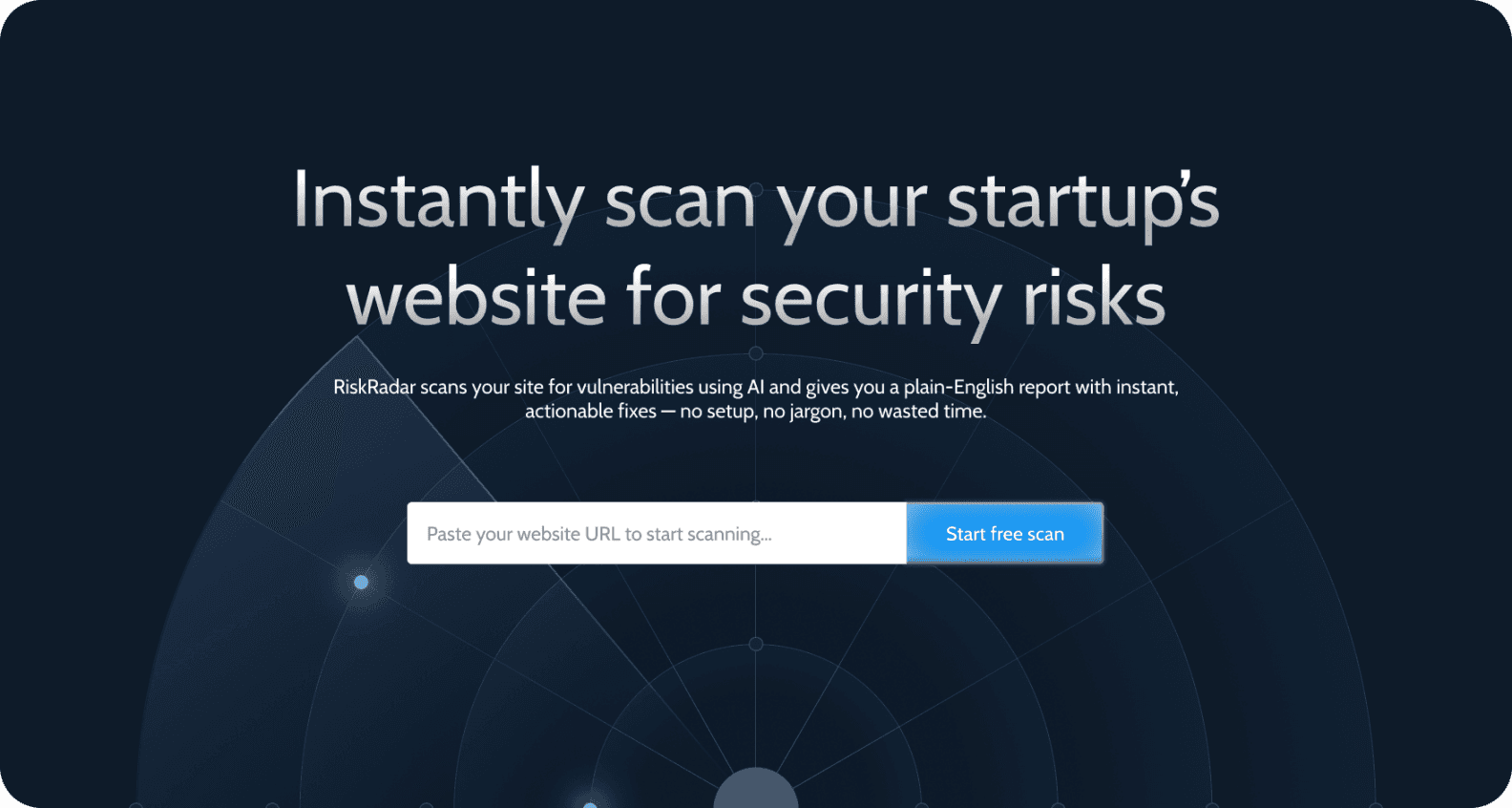
This is why the hero leads with a risk score rather than a feature list, the first thing a founder sees is an answer, not a pitch.
Stylescape
I began by building a stylescape that captured the brand's core traits: trust, speed, and clarity. The goal was to balance the seriousness of security with the accessibility of a modern SaaS product.
Muted tones and clean typography set the foundation, familiar enough to signal credibility, because no founder is buying security from a brand that feels experimental. But paired with fresh accents, the palette keeps RiskRadar from feeling like another heavy enterprise tool. The visual language had to say "we take this seriously" and "you don't need a security team to use this" at the same time.
This combination became the visual foundation for everything that followed, confident and credible, yet still startup-friendly.

RiskRadar, the AI-powered vulnerability scanner for startups
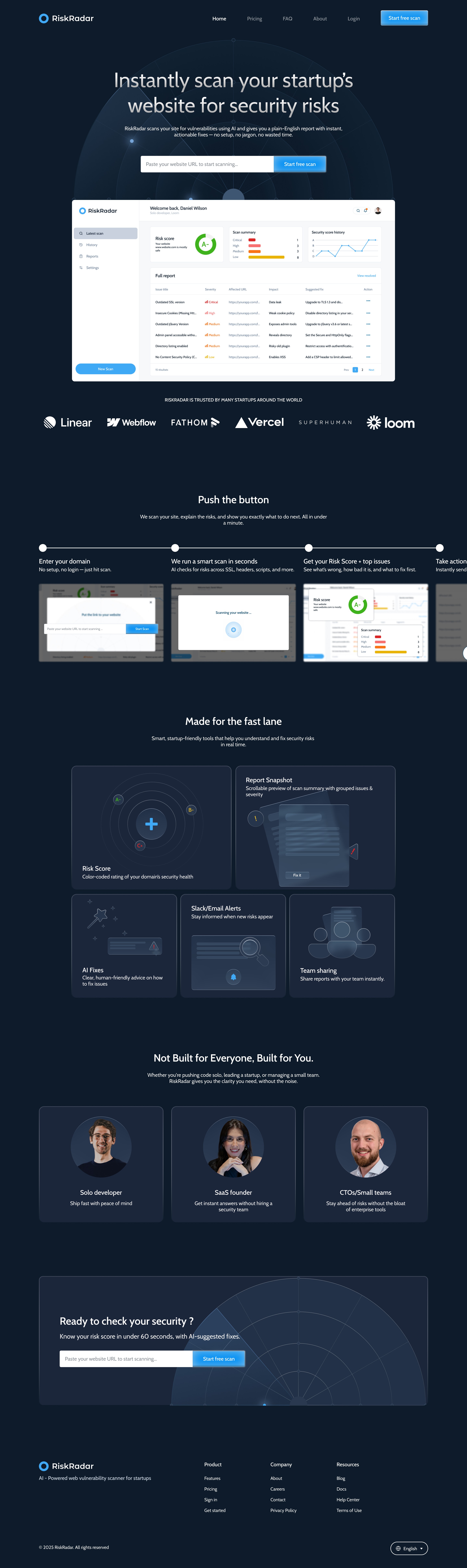
RiskRadar makes web security feel simple. By entering a URL, users instantly receive a clear risk score, plain-English explanations, and AI-suggested fixes.
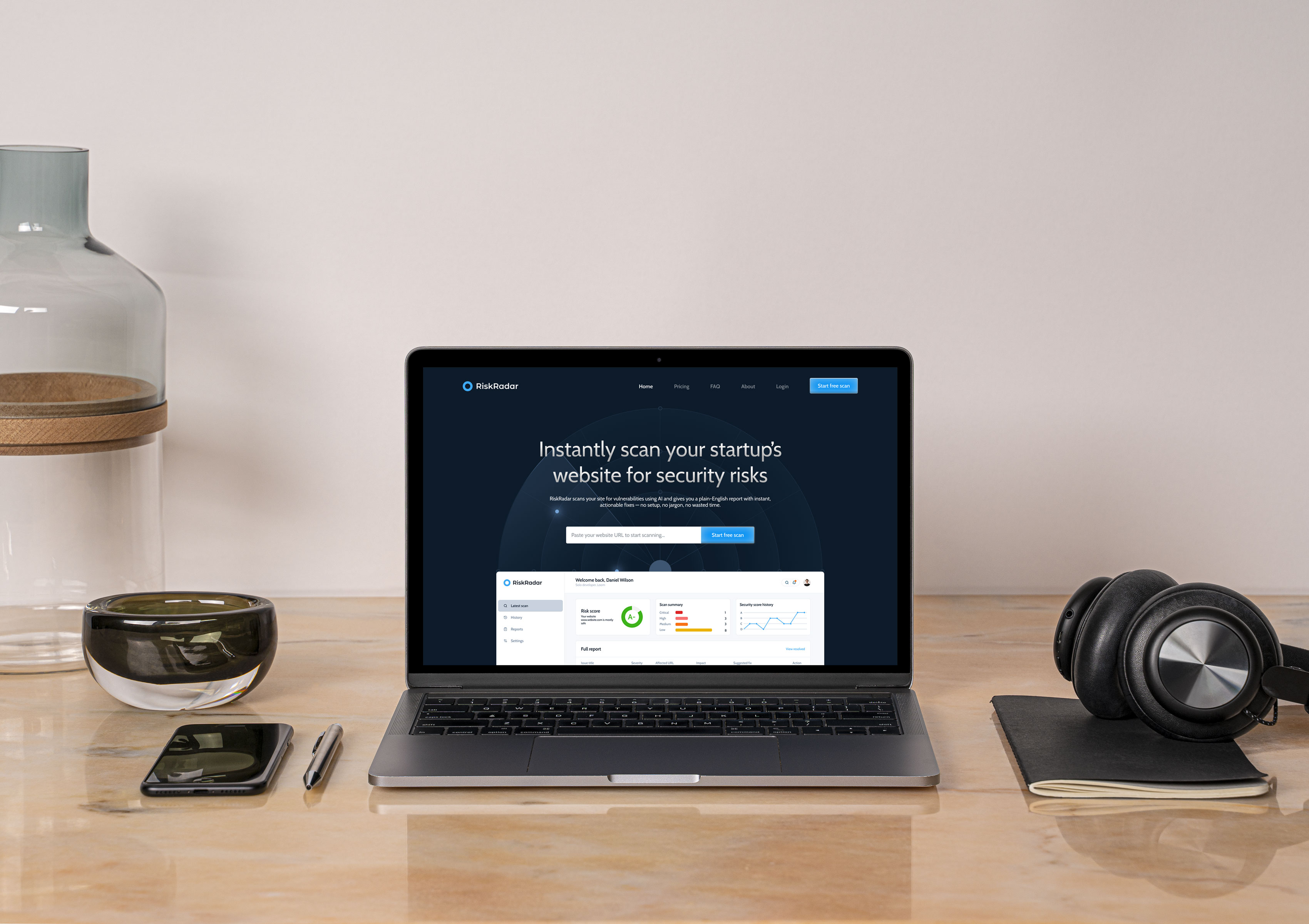
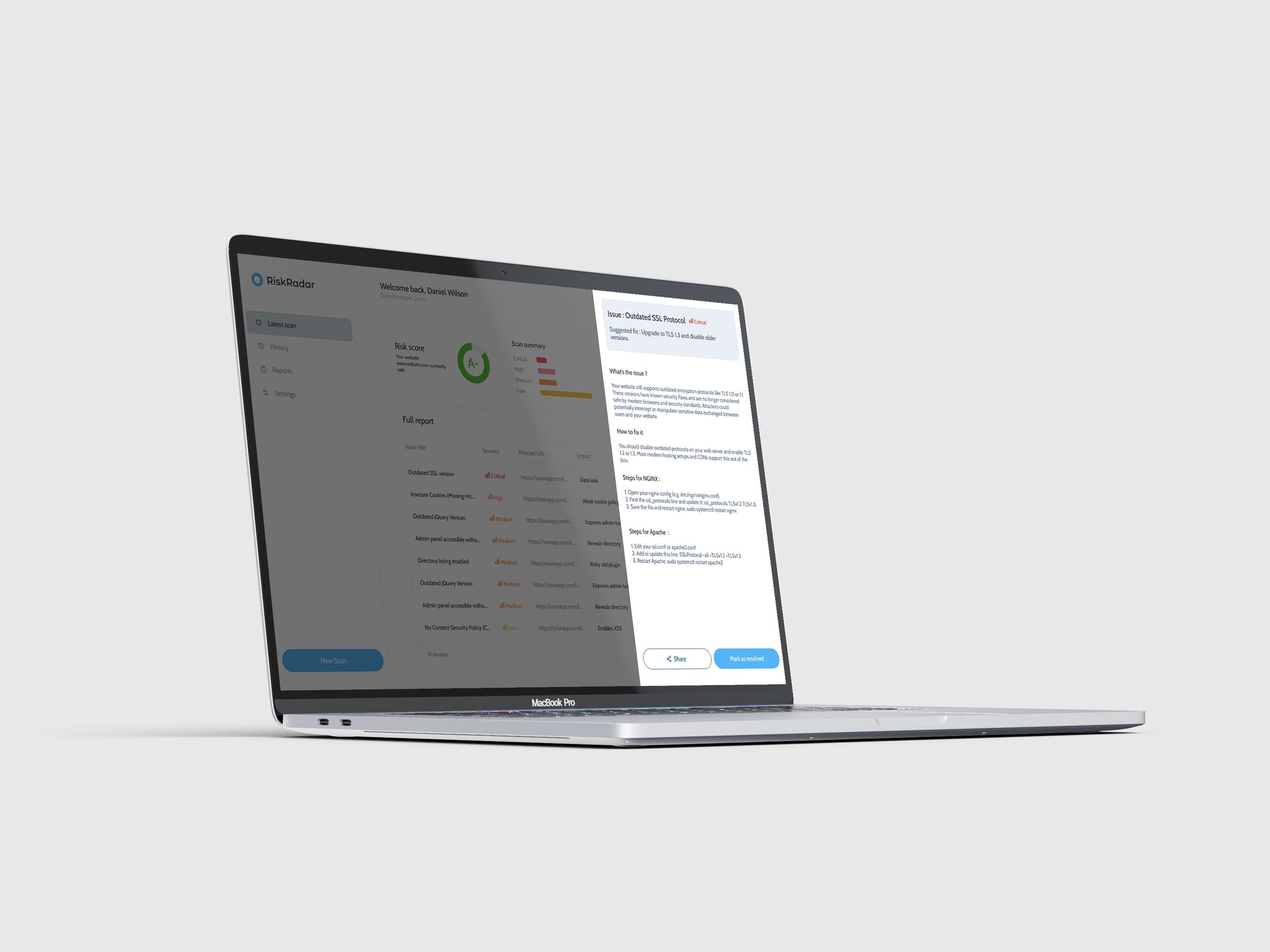
The landing page highlights this with a strong hero CTA, a step-by-step flow, and a clean dashboard preview that shows instant value.
Designing Security That Feels Simple
The final design positions RiskRadar as a startup-friendly security tool that feels fast and approachable, and every section was built to earn that feeling.
The hero leads with an outcome rather than a feature, because the first thing a hesitant founder needs to see is an answer, not a pitch.
The "how it works" section exists to neutralize the complexity that makes security tools feel intimidating, three plain steps before any commitment asked.
Feature highlights sit in a bento grid that keeps things digestible rather than overwhelming, and the dashboard preview answers the silent question every visitor has: "what will I actually get out of this?"
The result is a product that looks credible without overwhelming users, designed to move at the pace of startups, and convert at the pace of a good first impression.